
Key Factors and Emerging Trends Shaping the Single Nucleotide Polymorphism (SNP) Genotyping Market Landscape
By Menshly Wellness Desk | Apr 24, 2026
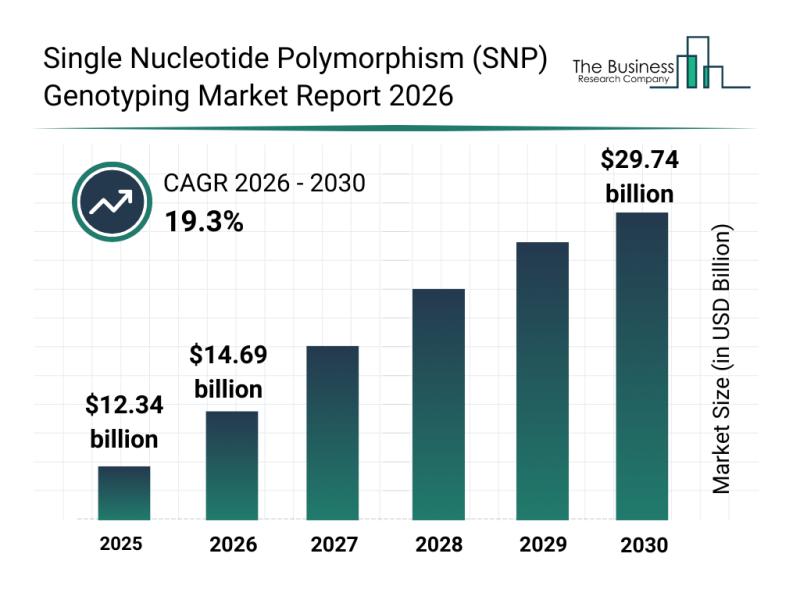
Introduction to SNP Genotyping Market
The Single Nucleotide Polymorphism (SNP) genotyping market is a rapidly evolving field that has gained significant attention in recent years due to its potential to revolutionize the field of genetics and personalized medicine. SNPs are the most common type of genetic variation, and they play a crucial role in determining an individual's susceptibility to certain diseases. The SNP genotyping market is driven by the increasing demand for genetic testing and the growing need for personalized medicine. In this article, we will discuss the key factors and emerging trends that are shaping the SNP genotyping market landscape in 2026, with a focus on longevity.
Key Factors Driving the SNP Genotyping Market
Several key factors are driving the growth of the SNP genotyping market. One of the primary drivers is the increasing demand for genetic testing. Genetic testing has become a crucial tool in the diagnosis and treatment of diseases, and SNPs are a key component of genetic testing. The growing need for personalized medicine is also driving the demand for SNP genotyping. Personalized medicine involves tailoring medical treatment to an individual's unique genetic profile, and SNPs play a crucial role in determining this profile. Additionally, advances in technology have made SNP genotyping faster, cheaper, and more accurate, making it more accessible to researchers and clinicians.
Another key factor driving the SNP genotyping market is the growing awareness of the importance of genetic variation in disease susceptibility. Research has shown that SNPs can play a significant role in determining an individual's risk of developing certain diseases, such as diabetes, heart disease, and cancer. As a result, there is a growing demand for genetic testing that can identify individuals who are at high risk of developing these diseases. The SNP genotyping market is also driven by the increasing use of genomics in drug development. Pharmaceutical companies are using SNP genotyping to identify genetic variations that can affect an individual's response to certain drugs, allowing for more targeted and effective treatment.
Emerging Trends in the SNP Genotyping Market
Several emerging trends are shaping the SNP genotyping market landscape in 2026. One of the most significant trends is the increasing use of next-generation sequencing (NGS) technology. NGS technology allows for the rapid and cost-effective sequencing of entire genomes, making it possible to identify SNPs and other genetic variations on a large scale. This technology is revolutionizing the field of genetics and is expected to have a significant impact on the SNP genotyping market. Another trend is the growing use of SNP genotyping in non-invasive prenatal testing (NIPT). NIPT involves analyzing a pregnant woman's blood to detect genetic variations in the fetus, and SNP genotyping is a key component of this testing.
Artificial intelligence (AI) and machine learning (ML) are also emerging trends in the SNP genotyping market. These technologies are being used to analyze large amounts of genetic data and identify patterns and associations that may not be apparent through traditional analysis. This is allowing researchers to identify new genetic variants associated with disease and to develop more targeted and effective treatments. The use of cloud computing is also becoming more prevalent in the SNP genotyping market. Cloud computing allows researchers to store and analyze large amounts of genetic data remotely, making it possible to collaborate with other researchers and share data more easily.
Longevity and the SNP Genotyping Market
Longevity is a key area of focus in the SNP genotyping market in 2026. Research has shown that certain SNPs can play a significant role in determining an individual's lifespan. For example, some SNPs have been associated with an increased risk of age-related diseases such as Alzheimer's and Parkinson's, while others have been associated with a decreased risk of these diseases. The identification of these SNPs can provide valuable insights into the biology of aging and can help to develop more effective treatments for age-related diseases.
🎥 WELLNESS MASTERCLASS
The SNP genotyping market is also being driven by the growing demand for genetic testing that can identify individuals who are at high risk of developing age-related diseases. This testing can allow for early intervention and prevention, which can help to improve health outcomes and increase longevity. Additionally, the use of SNP genotyping in personalized medicine is expected to play a significant role in promoting longevity. By tailoring medical treatment to an individual's unique genetic profile, clinicians can provide more targeted and effective treatment, which can help to improve health outcomes and increase longevity.
Challenges and Limitations in the SNP Genotyping Market
Despite the many advances in the SNP genotyping market, there are still several challenges and limitations that need to be addressed. One of the major challenges is the complexity of genetic data. Genetic data is highly complex and requires specialized expertise to analyze and interpret. This can make it difficult for researchers and clinicians to use SNP genotyping data effectively. Another challenge is the cost of SNP genotyping. While the cost of SNP genotyping has decreased significantly in recent years, it is still a relatively expensive technology, which can make it inaccessible to some researchers and clinicians.
The SNP genotyping market is also limited by the lack of standardization in genetic testing. There is currently no standard protocol for SNP genotyping, which can make it difficult to compare data from different studies. This lack of standardization can also make it difficult to develop effective treatments based on SNP genotyping data. Additionally, there are concerns about the ethics of genetic testing, particularly in the context of personalized medicine. There is a need for clear guidelines and regulations to ensure that genetic testing is used responsibly and with respect for individual autonomy.
Conclusion
In conclusion, the SNP genotyping market is a rapidly evolving field that is being driven by several key factors, including the increasing demand for genetic testing, the growing need for personalized medicine, and advances in technology. Emerging trends such as the use of NGS technology, NIPT, AI, ML, and cloud computing are also shaping the market landscape. Longevity is a key area of focus in the SNP genotyping market, with research showing that certain SNPs can play a significant role in determining an individual's lifespan. However, there are still several challenges and limitations that need to be addressed, including the complexity of genetic data, the cost of SNP genotyping, and the lack of standardization in genetic testing.
As the SNP genotyping market continues to evolve, it is likely that we will see significant advances in our understanding of the genetics of longevity. This will allow for the development of more effective treatments for age-related diseases and will help to improve health outcomes and increase longevity. However, it is also important to address the challenges and limitations in the market, including the need for clear guidelines and regulations to ensure that genetic testing is used responsibly and with respect for individual autonomy. By working together to address these challenges, we can unlock the full potential of SNP genotyping and promote a healthier and more longevity-focused future for all.
About Menshly Life
Advancing human potential through science and AI. Follow on X

0 Comments